Cotton
The fibre
Natural, breathable and easy to care for, cotton is the most widely used fibre for formal shirts and can be woven light or heavy, smooth or textured.
- Feel
- Soft, natural
- Use
- All formal shirts

Gallery F · Technical
Before a shirt has a colour or a cut, it has a cloth. The yarn, the weave and the way the panels are joined decide how a formal shirt looks, feels and wears through the day.
Section 01 · Cotton & its weaves
Cotton is the classic fibre for formal shirts: soft, breathable and comfortable against the skin. What changes its character is the weave — the pattern in which lengthwise (warp) and crosswise (weft) yarns interlace. The diagrams show warp in teal and weft in sand.
The fibre
Natural, breathable and easy to care for, cotton is the most widely used fibre for formal shirts and can be woven light or heavy, smooth or textured.
Plain weave, fine
A tightly woven plain weave with a fine horizontal rib. Smooth, light and with a soft sheen — the classic business shirt cloth.
Basket weave
Paired yarns create a visible, slightly coarse texture. Sturdy and casual-leaning, it is the cloth of the button-down collar.
Diagonal weave
A diagonal rib gives twill a soft drape and natural crease resistance, with a subtle sheen along the diagonal.
Dense plain weave
A dense, smooth plain weave with a flat, matte finish. Clean and refined, it often appears in very formal white shirts.
Section 02 · Properties
Three properties shape the wearing experience of a formal shirt. The scales below illustrate typical ranges across common shirting cloths — not measurements of any particular garment.
Smooth cloths such as poplin and broadcloth look sharper and more formal. Textured cloths such as oxford appear more relaxed and hide creases well.
Lighter cloths are cooler and drape closely; heavier cloths feel substantial, resist wrinkles and are less likely to be see-through.
Open, lighter weaves let air move through the cloth — welcome in a warm, humid city. Denser weaves feel warmer but more structured.
Section 03 · Construction
A formal shirt is assembled from a dozen or more pieces. Seven points reveal the care with which it has been made.
A collar and separate collar stand, often with an interlining, give the collar its shape and keep the points in place.
The panel across the shoulders. A split yoke can follow the shoulder line more closely; a single yoke keeps the back clean.
The strip carrying the buttons and buttonholes. On patterned shirts, careful makers align the pattern across it.
Evenly spaced buttons, firmly sewn, keep the front flat. Button material and thickness affect both look and durability.
Barrel, mitred or French cuffs — each finished with an interlining so the cuff keeps its shape at the wrist.
Small, even stitches along the side seams and collar are a quiet sign of care. Neat seams lie flat and resist fraying.
A clean hem, reinforced stress points and pressed seams complete the shirt and help it keep its shape through washing.
Section 04 · The Plates
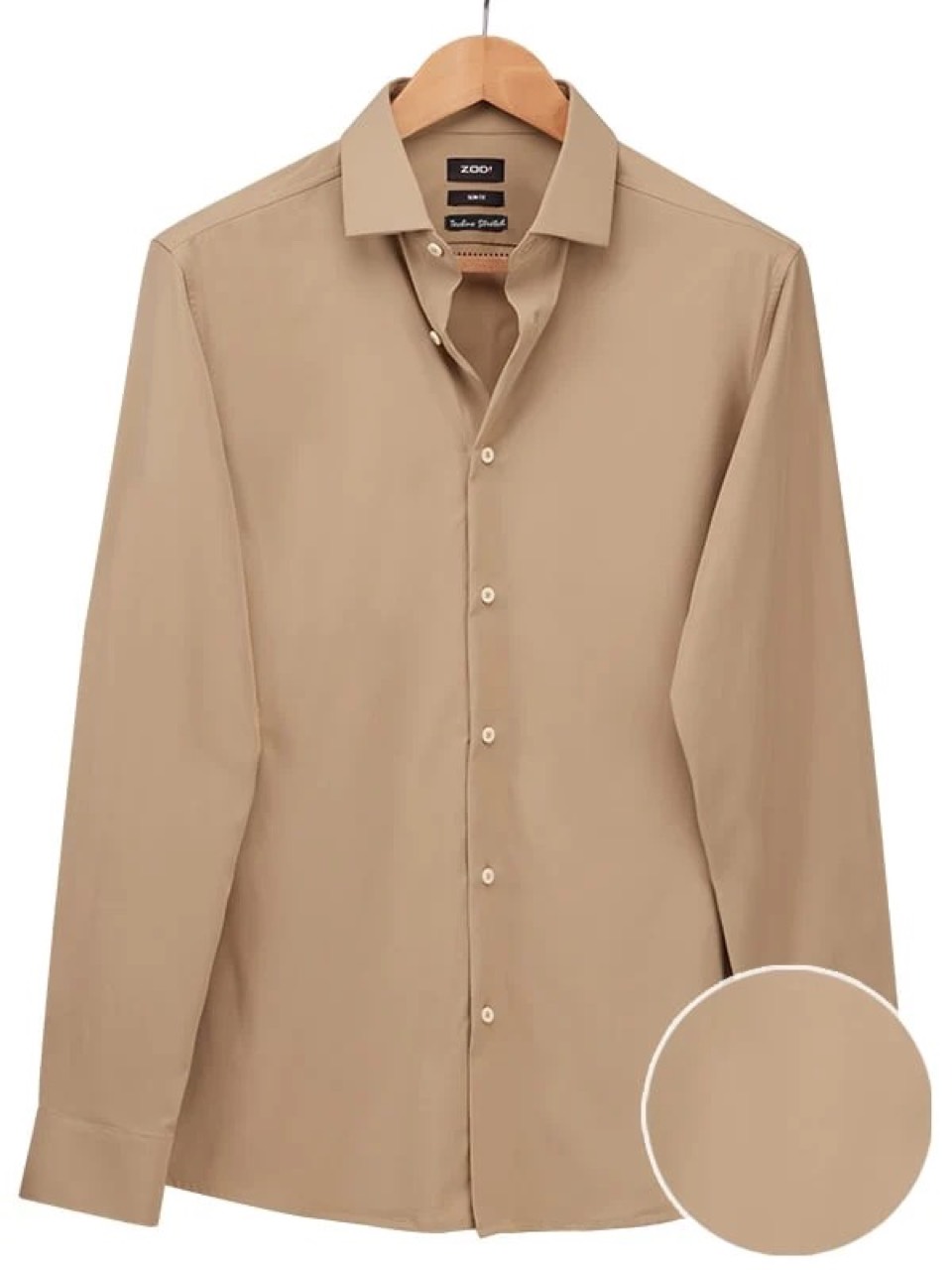
A contact sheet of shirts photographed on the hanger, where the fall of the cloth reveals its weight, texture and pattern. Studied for appearance only — these plates are not statements of fibre content.
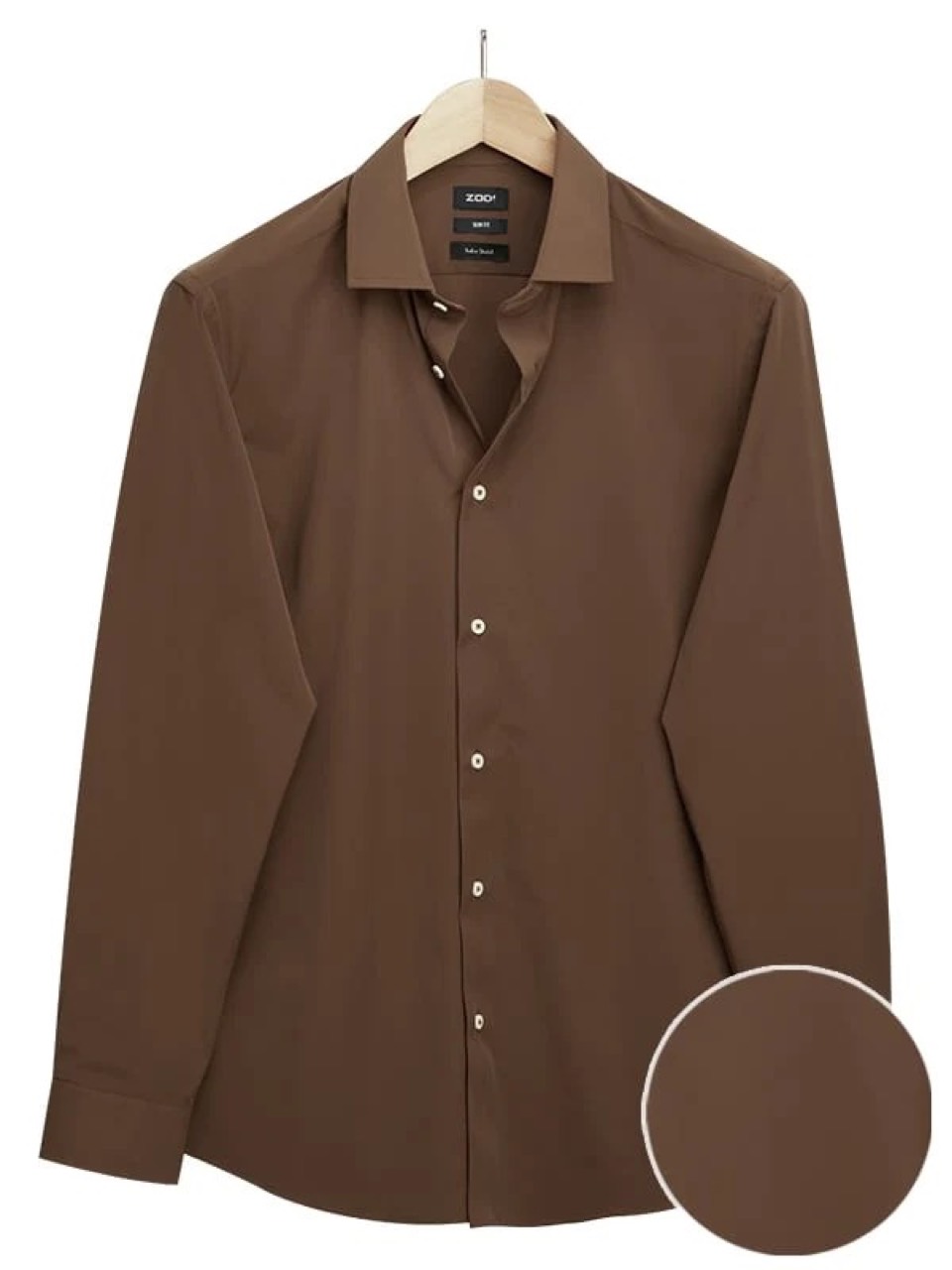
A magnified inset shows the fine surface of a smooth, solid cloth.
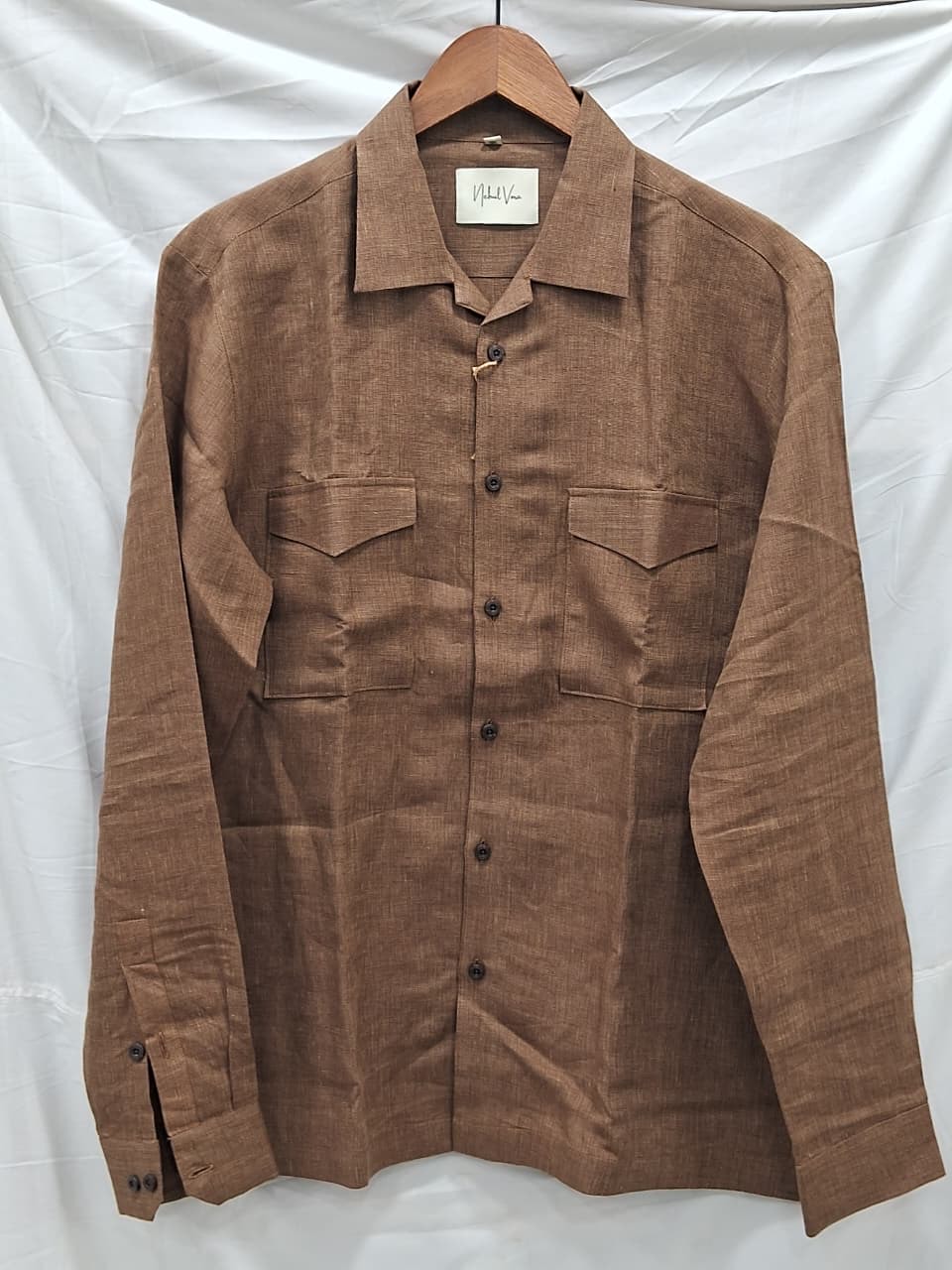
An irregular slub texture gives depth to a solid colour.
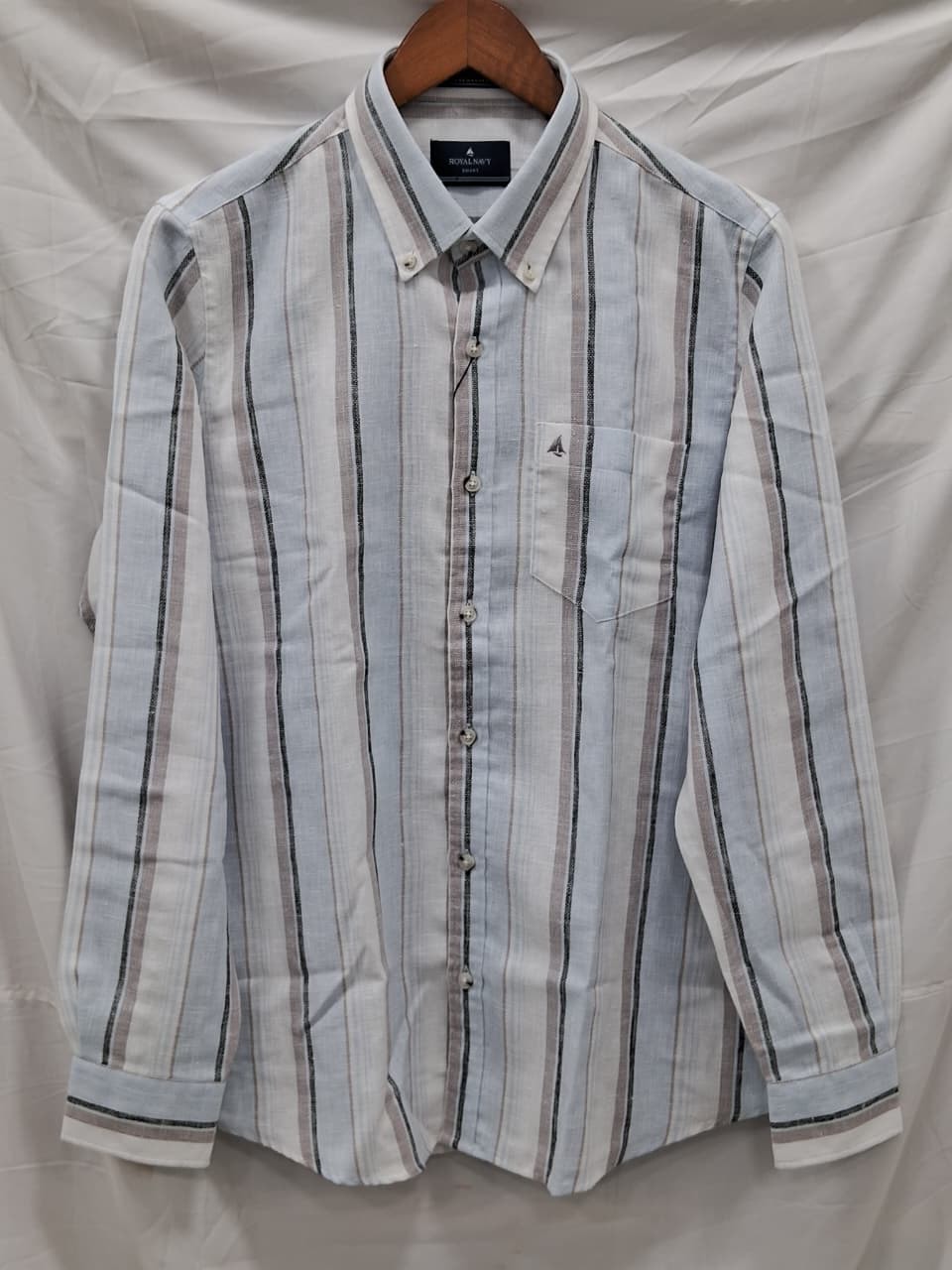
Stripes reveal the straightness of the weave along the body.
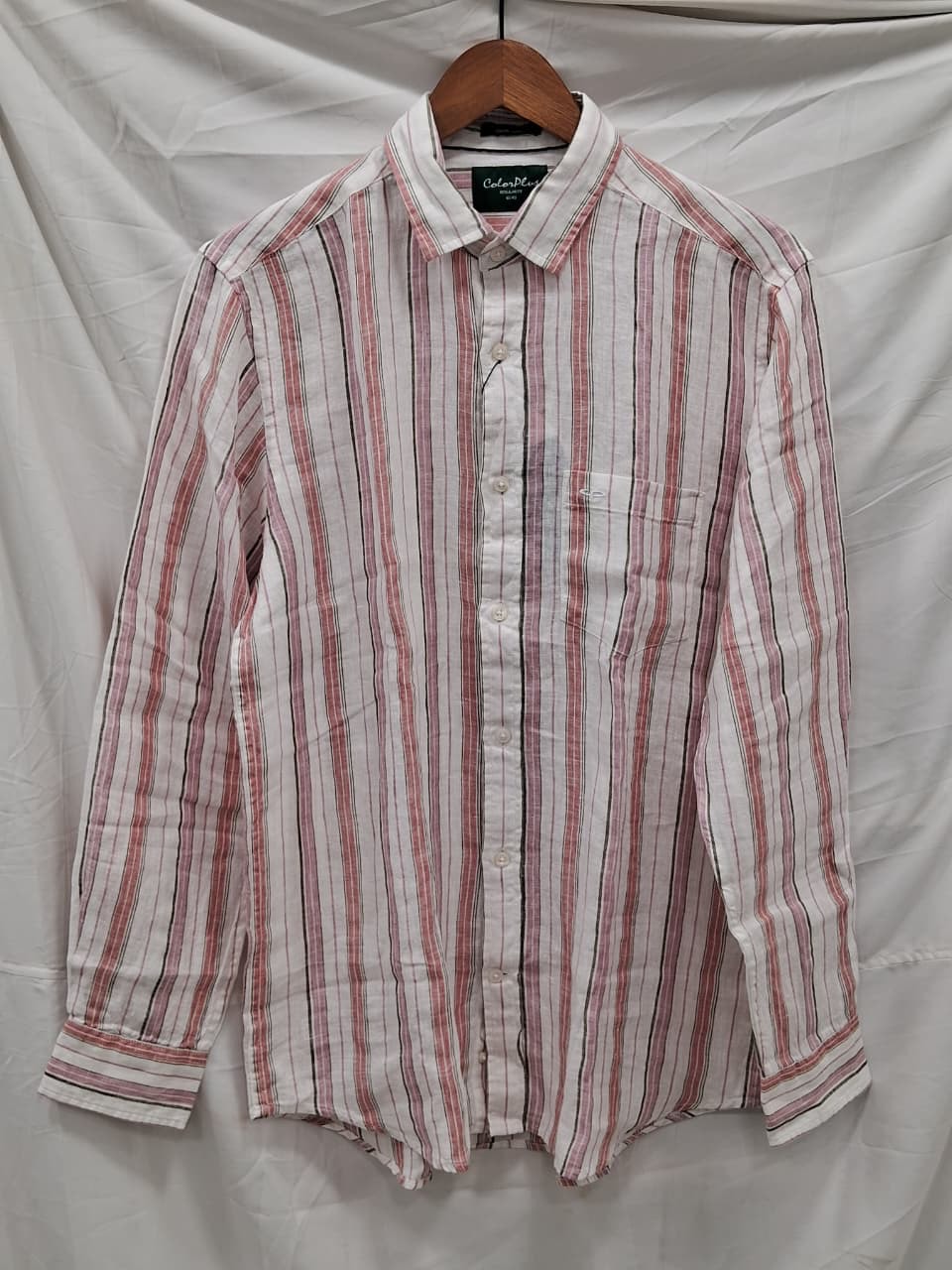
A soft, open-looking cloth drapes with relaxed folds.
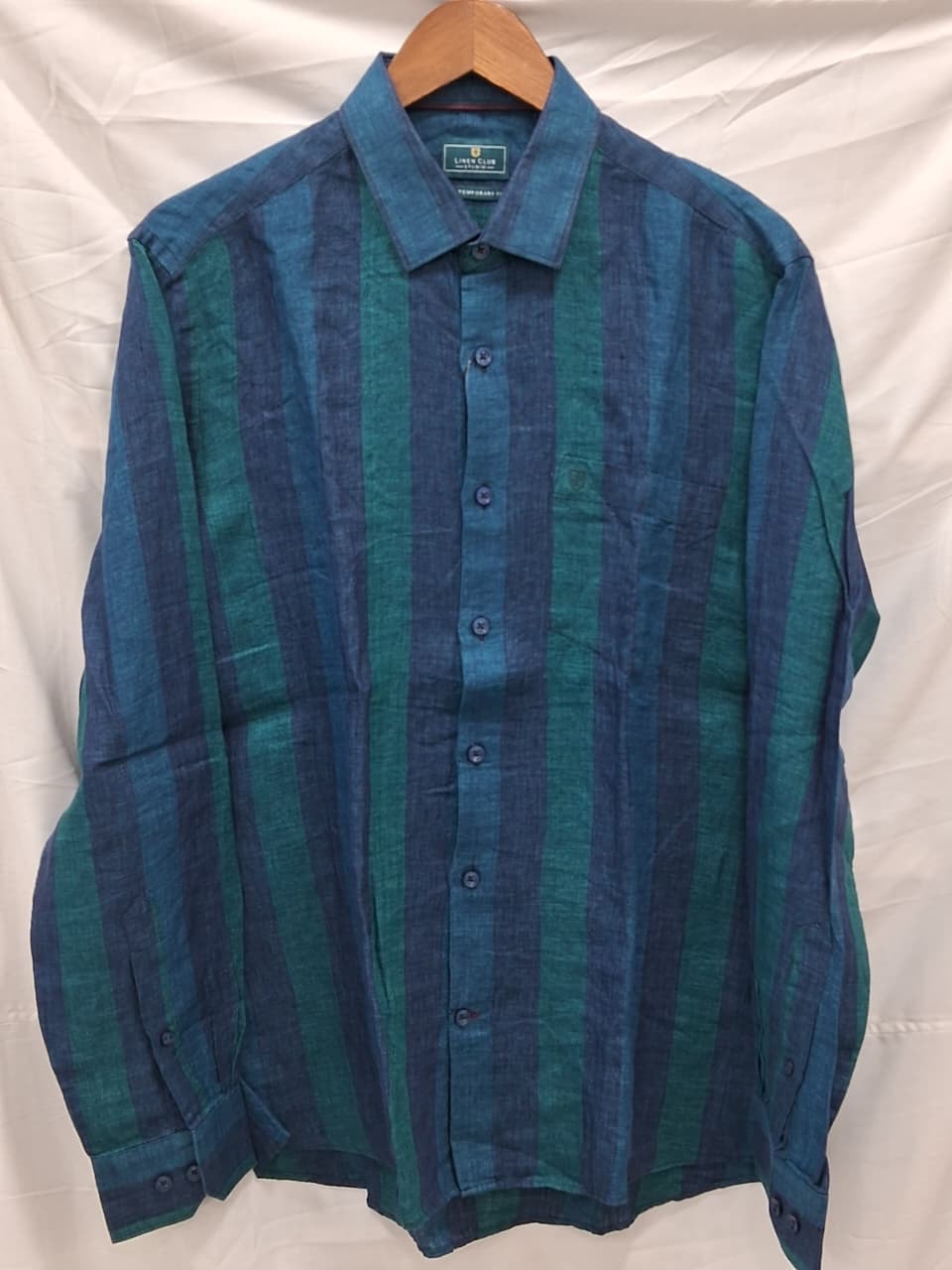
Broad stripes show how pattern follows the cut of the shirt.
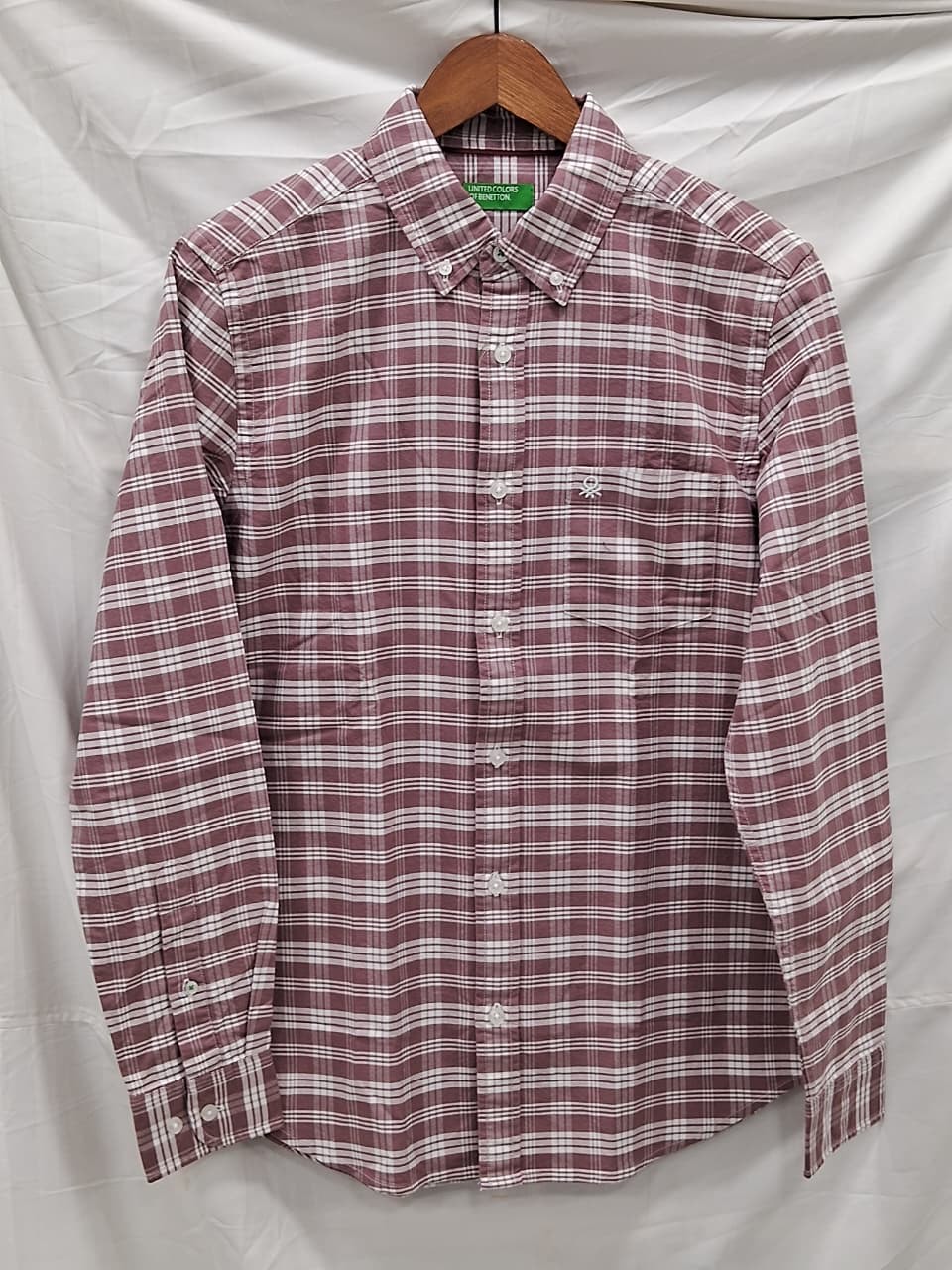
A button-down collar on a check cloth — the oxford tradition.
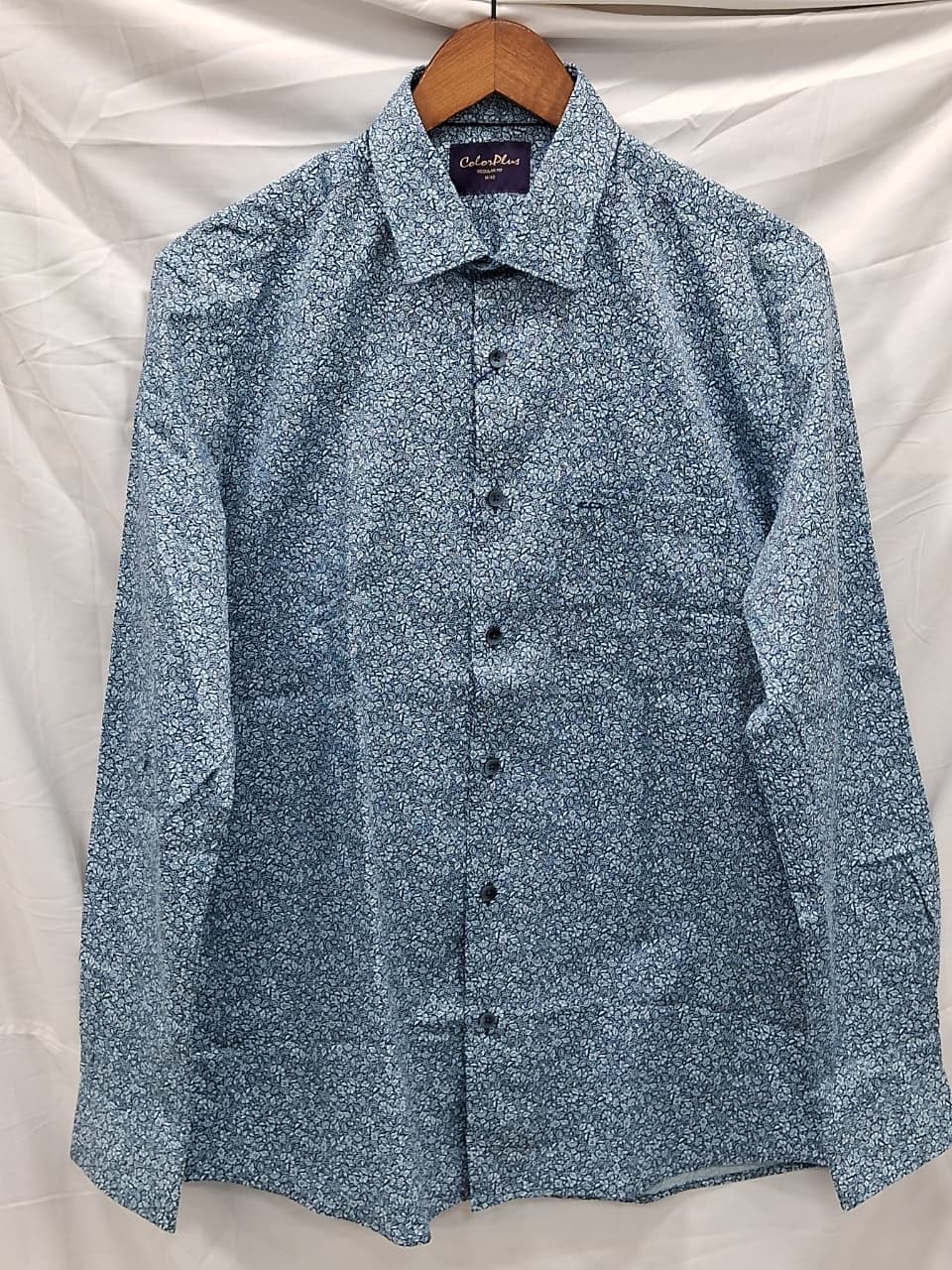
A micro print sits across the cloth like a texture.
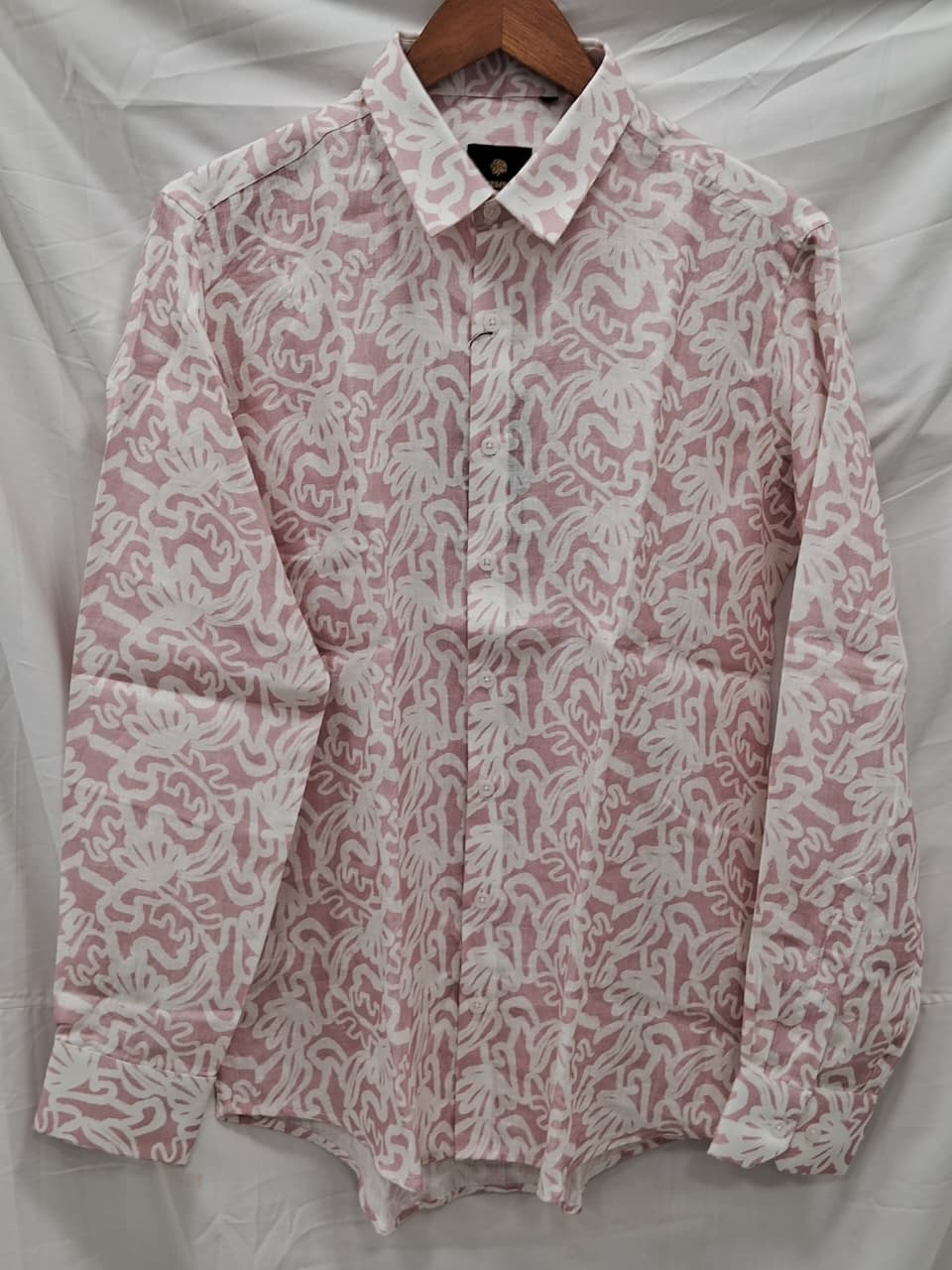
Paisley printed on a light cloth for relaxed occasions.
Section 05 · Appearance & wear
Smooth weaves reflect light evenly and look crisp; textured weaves scatter it and look softer and more casual.
Lighter, breathable cloths are cooler in humid weather; heavier cloths feel more substantial in air-conditioned offices.
Twill and textured cloths tend to resist visible creasing; fine poplins look sharpest but crease more readily.
Follow each garment's care label. Unbutton collars and cuffs before washing, and hang shirts to dry on a shaped hanger.